
Thermal Foam Tape Manufacturers Serve Global Buyers with New Solutions in 2026
Dongguan, Guangdong, China – October 13, 2026
Global buyers are heading into 2026 with a lot more on their wish list when it comes to Thermal Foam Tape. They want bonds they can trust, thermal insulation that holds up, vibration control, and an application process that stays clean. Not too much to ask, right?
Take the broader adhesive market. Grand View Research put the global pressure-sensitive adhesives market at roughly USD 13.1 billion in 2023, and it expects growth to keep rolling through 2030. MarketsandMarkets estimated thermal interface materials at around USD 4.3 billion in 2023. Now, those numbers aren’t a direct measure of Thermal Foam Tape. Still, they do hint at something bigger: demand is rising for functional adhesive materials across electronics, automotive systems, appliances, and renewable energy equipment.
And honestly? The market is getting more technical by the day.
Manufacturers like 3M, Nitto Denko, tesa, Tesa SE, Avery Dennison, Scapa, and Berry Global are duking it out over foam density, acrylic chemistry, liner design, and temperature resistance. One supplier might give you fantastic peel strength, but weak compression recovery. Another could ace lab testing and then struggle in a humid, dusty assembly line. Sound familiar?
Dr. George Wypych, a well-known polymer and adhesion author, once said, “Adhesion is a surface phenomenon.” That’s still a pretty practical reminder for international purchasing teams. Surface energy, pressure, aging time, and application temperature can all shift results—sometimes dramatically.
So this 2026 guide looks at leading Thermal Foam Tape manufacturers for global buyers. It weighs technical experience, production consistency, documentation, customization, and supply capability. Market values reported by research firms don’t always line up, and rankings are no substitute for real product trials. That caveat matters. Before approving a supplier, buyers should ask for samples, technical data sheets, certification records, and testing under actual operating conditions.
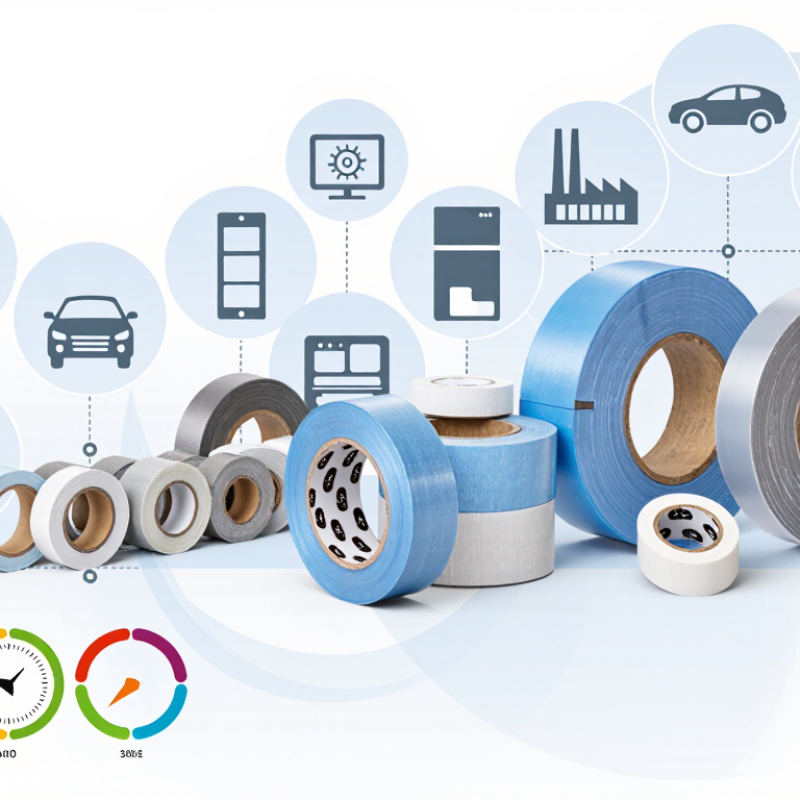
Thermal Foam Tape: Definition, Structure, and Core Applications
Thermal foam tape is a pressure-sensitive adhesive tape with a compressible foam core. It joins surfaces while transferring heat across small gaps. Unlike ordinary mounting tape, it balances adhesion, cushioning, and thermal conductivity. The foam may contain acrylic, silicone, or modified polymer compounds. Fillers such as ceramic powder can improve heat flow. The design is never universal.Its structure usually has four functional layers: a release liner, adhesive, foam carrier, and sometimes a second adhesive face. A thin, dense carrier improves handling and dimensional stability. A softer carrier conforms to uneven housings and reduces vibration. During supplier evaluation, I check liner removal, bond thickness, thermal resistance, and peel strength. Laboratory data matters, but production behavior matters more. Dusty surfaces can weaken even a strong adhesive.Thermal Break Foam Tape is used in LED modules, battery packs, sensors, displays, and compact power electronics. It can secure a heat spreader while reducing rattle around delicate components. In an LED assembly, a controlled bond line helps move heat toward an aluminum plate. In battery equipment, insulation and heat management must be balanced carefully. Excessive compression may damage cells or restrict expansion. Outdoor devices also need resistance to moisture, aging, and temperature cycling. Some specifications look impressive on paper. Field testing may reveal edge lifting after repeated heating. That is why buyers should compare samples under real assembly pressure, not only catalog figures.
How to Evaluate Thermal Foam Tape Manufacturers in 2026
Evaluating Thermal Foam Tape manufacturers in 2026 requires more than comparing prices. A reliable supplier should explain foam density, thickness tolerance, thermal conductivity, and adhesive performance. Ask for current technical data, not copied catalog language. The phrase Thermal Insulation Foam Tape can describe very different constructions.Request samples from several production lots. Measure thickness at the edges and center. Check peel adhesion after application to aluminum, painted steel, and plastic panels. Test shear strength under heat, humidity, and vibration. A tape that performs well for one hour may fail after several weeks. Small details matter.Factory evidence matters too. Review equipment maintenance, incoming material controls, curing conditions, and lot traceability. Confirm whether the manufacturer can provide test reports from competent laboratories. Examine packaging, storage limits, and shipment protection. Moisture damage can begin before installation.Do not trust a perfect sample alone. It may not represent routine production. Ask for nonconforming-rate data and corrective-action records. Some suppliers avoid uncomfortable questions. That is a warning sign.A practical audit should include production operators, quality engineers, and application specialists. Their answers should match the documents. They should also explain limitations clearly. For example, a low-density foam may reduce weight but compress unevenly. I have found that supplier evaluation is rarely flawless. Product trials can expose assumptions that a spreadsheet misses. Keep written records, repeat critical tests, and leave room for changing field conditions.
2026 Top Thermal Foam Tape Manufacturers for Global Buyers – How to Evaluate Thermal Foam Tape Manufacturers in 2026
| Evaluation Dimension | Why It Matters | 2026 Buyer Benchmark | Evidence to Request | Relevant Standard or Reference | Suggested Weight |
|---|---|---|---|---|---|
| Thermal Conductivity | Determines how effectively heat transfers through the tape layer. | Compare products using the same test method, temperature, thickness, and conditioning. Do not compare headline values from different test methods directly. | Lot-specific datasheet, test temperature, specimen thickness, and complete test report. | ASTM D5470 is widely used for thermal transmission properties of thermally conductive electrical insulation materials. | 25% |
| Thermal Impedance | Accounts for tape thickness and is often more useful than conductivity when estimating interface heat resistance. | Require impedance data at the intended pressure, thickness, and temperature rather than relying only on conductivity. | Pressure-versus-impedance curve, test fixture details, and thickness tolerance. | ASTM D5470 test principles; confirm whether the report uses the buyer’s intended assembly pressure. | 15% |
| Adhesion Performance | Controls mounting reliability on metals, plastics, painted surfaces, and other substrates. | Evaluate 180-degree peel, initial tack, and adhesion after aging on the actual substrate combination. | Peel-test results, substrate preparation procedure, dwell time, peel rate, and failure-mode photographs. | ASTM D3330 covers peel adhesion of pressure-sensitive tape. | 15% |
| Holding Power and Shear | Indicates resistance to creep when the tape supports a constant load over time. | Require results at the intended temperature, load, surface, and tape width; avoid using room-temperature data for high-temperature applications. | Static-shear report, load configuration, test temperature, and failure time or displacement. | ASTM D3654 covers holding power of pressure-sensitive tapes. | 10% |
| Temperature Resistance | The adhesive and foam must remain functional during installation, operation, and thermal cycling. | Verify continuous-use and short-term temperature limits separately. Require data after thermal aging and cycling, not only a nominal rating. | Thermal-aging schedule, cycling profile, adhesion retention, and visible foam or adhesive changes. | Use a documented internal or independent aging method with clearly defined exposure conditions. | 10% |
| Flammability Compliance | Relevant for electrical, electronic, automotive, and industrial assemblies with fire-safety requirements. | Check the exact tape construction and thickness tested; a rating for one thickness does not automatically apply to every thickness. | Independent flammability report identifying the tested construction, thickness, and production control process. | UL 94 procedures and IEC 60695-11-10 methods may be relevant, depending on the end-use requirement. | 8% |
| Electrical Insulation | Thermally conductive tapes may also need dielectric strength, insulation resistance, or voltage-withstand performance. | Specify the required dielectric strength and insulation properties for the final assembly, not just the tape material. | Dielectric-strength report, insulation-resistance data, and test-condition details. | The applicable method depends on the product category and electrical design; require a method identified in the report. | 7% |
| Environmental and Chemical Compliance | Supports market access and reduces restricted-substance and chemical-disclosure risks. | Require current declarations covering RoHS, REACH, and any destination-market requirements applicable to the complete tape construction. | Signed compliance declaration, material disclosure, and revision-controlled supplier documentation. | EU RoHS Directive 2011/65/EU and amendments; EU REACH Regulation (EC) No 1907/2006. | 5% |
| Quality Management and Traceability | Consistent batch performance is essential for high-volume production and qualification control. | Prefer documented process controls, lot identification, retained samples, change notification, and a corrective-action process. | Quality certificate, sample certificate of analysis, audit summary, and change-control procedure. | ISO 9001:2015 provides a recognized quality-management framework. | 3% |
| Supply Capability and Technical Support | A technically suitable tape is not commercially suitable if lead times, customization, or engineering support are unreliable. | Assess minimum order quantity, standard roll formats, slitting capability, sample lead time, production lead time, capacity, and technical response time. | Written quotation, capacity statement, lead-time history, packaging specification, and escalation contact. | Use a supplier audit and purchase-order performance review; no single universal standard defines commercial reliability. | 2% |
Buyer note: Thermal conductivity, thermal impedance, adhesion, temperature resistance, and compliance results should be compared only when the test method, specimen construction, thickness, substrate, pressure, temperature, and conditioning are equivalent.
Top Thermal Foam Tape Manufacturers Serving Global Buyers
In 2026, global buyers are looking for thermal foam tape manufacturers that offer stable quality, clear communication, and flexible production.Reliable suppliers usually provide acrylic, silicone, or rubber-based foam options for appliances, lighting, automotive components, and electronic housings. Each application needs different adhesion, thickness, density, and temperature resistance. A tape that performs well in a cool warehouse may fail near a heated enclosure.
Manufacturers serving global buyers should support OEM Thermal Foam Tape development with samples, drawings, and practical testing. Experienced technical teams can review surface energy, bonding pressure, storage conditions, and application speed. They should also explain test methods instead of sharing vague performance claims. Peel strength matters. So does aging. During evaluation, buyers can inspect liner release, edge cutting, roll consistency, and adhesive transfer after heat exposure. Small defects become expensive during automated assembly.
Supplier reliability involves more than production capacity. Buyers should examine batch records, inspection procedures, packaging quality, and export documentation. A capable factory can protect rolls from moisture and crushing during long-distance transport. Communication still needs careful review. Some suppliers respond quickly but avoid difficult questions about failure rates or replacement terms. That deserves attention. Even strong manufacturers may have uneven results between materials or production lots, so trial orders and independent testing remain sensible. A realistic partnership leaves room for correction, not just optimistic promises.
Key Product Differences Among Leading Manufacturers
Thermal foam tape manufacturers differ most in foam structure, adhesive chemistry, and test discipline. Closed-cell acrylic foam usually offers stronger moisture resistance than open-cell foam. Polyethylene foam remains lighter and more compressible. These differences matter when bonding outdoor panels, display frames, or uneven metal surfaces.
Fortune Business Insights valued the global adhesive tapes market at about USD 85.6 billion in 2023. Grand View Research also reports continued demand for high-performance bonding products. However, broad market figures do not prove thermal performance. Buyers should inspect technical data sheets carefully. Compare peel adhesion, shear strength, density, thickness tolerance, and service temperature. A 1.0 mm tape may absorb small surface gaps, while a 0.4 mm tape can improve alignment. Higher strength is not automatically better.
Tips: Ask for test results using your actual substrate. Request 90-degree peel data, holding power, and aging results after heat and humidity exposure. Check whether values were measured on stainless steel, painted metal, glass, or plastic. Results can change sharply. In practical evaluations, surface cleaning often influences bonding more than advertised strength. I have also seen excellent tapes fail because installers applied them below the recommended pressure or temperature. That detail is easy to overlook. Manufacturers with reliable quality systems should provide batch traceability, storage limits, and independent testing references. Some product claims still feel too broad, so buyers should challenge unclear wording before approval.
International Sourcing, Quality Control, and Compliance Requirements2026 Top Thermal Foam Tape Manufacturers for Global Buyers
International sourcing of thermal foam tape requires more than comparing quoted prices. Buyers should verify adhesive chemistry, foam density, thermal conductivity, and thickness tolerance before approving a supplier. An ODM Thermal Foam Tape project also needs clear drawings, application temperatures, liner specifications, and packaging instructions.
Request samples from at least two production lots. Test peel strength after 24 and 72 hours, not only immediately after application. Measure compression recovery and shear resistance under the expected load. A supplier should provide batch records, certificates of analysis, and traceable raw material information. Small details matter. A 0.2-millimeter thickness variation can affect heat transfer and assembly pressure.
Compliance checks must match the destination market and product use.Ask for current chemical declarations, restricted-substance screening, and safety documentation where applicable. Confirm whether the foam contains substances limited by regional regulations. Inspect export cartons for moisture barriers, lot numbers, and storage conditions. Humidity can weaken adhesive performance before the tape reaches the factory floor. Remote audits are useful, but they cannot replace physical inspection. I have seen attractive samples fail after temperature cycling because the backing material was poorly conditioned. That risk deserves a written corrective-action process, even when the supplier seems experienced.
How Global Buyers Can Select the Right Manufacturing Partner
Selecting the right thermal foam tape manufacturing partner requires more than comparing catalog prices. Global buyers should examine technical evidence, production discipline, and communication habits.
Request samples made from the same foam grade, adhesive system, and thickness planned for production. Measure thermal resistance, peel strength, shear holding power, dielectric performance, and compression recovery. Test them after heat, humidity, and aging exposure. A polished sample can mislead. I learned this after one tape performed well in the laboratory but slipped during assembly trials. Ask for complete test methods, not only attractive numbers. The manufacturer should explain measurement limits clearly.
Visit the production site, physically or through a verified audit. Check coating uniformity, slitting accuracy, cleanroom controls, and batch traceability. Review whether operators record temperature, pressure, and curing conditions. Reliable partners can provide certificates, inspection records, safety data, and corrective-action reports without hesitation. Confirm monthly capacity, minimum order quantities, lead times, export packaging, and replacement procedures. Communication matters. A supplier that answers quickly but avoids technical questions may create delays later. Build a small pilot order with defined acceptance limits. Keep room for revision, because early specifications are often incomplete.
Nomex Paper Insulation Tape: Advancing Electrical Safety—Insights from the MarketsandMarkets Insulation Materials Report
Nomex Paper Insulation Tape FON-08013
Advanced aramid-paper insulation tape is gaining attention as electrical-equipment manufacturers seek safer, lighter, and more economical materials. Recent insulation-materials market reports identify electrification, renewable-energy systems, and higher-performance industrial equipment as major demand drivers. In these applications, the tape’s dielectric strength exceeding 800 V—even under humid conditions—supports dependable insulation for coils, transformers, motors, and connection points where moisture can reduce electrical reliability.The material also offers a practical cost advantage, delivering thermal and flame resistance comparable to conventional high-performance insulation paper while potentially reducing material costs by up to 70%. Its UL94 V-0 classification and self-extinguishing behavior are particularly valuable in heat- and fire-sensitive equipment. Operating from -150°C to 250°C, it maintains dimensional and insulating stability across severe temperature changes, supporting use in transportation, energy, and industrial control systems.Mechanical durability further strengthens its application value. With tensile strength above 10 kg per 25 mm, the tape can withstand winding tension, vibration, and routine assembly stress without easily tearing. Resistance to solvents, acids, and alkalis also helps extend service life in chemically demanding environments. These combined electrical, thermal, mechanical, and chemical properties reflect the performance priorities emphasized in professional insulation-materials market analyses, where reliability, lifecycle cost, and safety increasingly influence material selection.
Conclusion
This guide explains how Thermal Foam Tape is designed, from its foam carrier and thermal interface layer to its adhesive system and protective liner. It outlines core applications in electronics, LED lighting, automotive components, battery systems, and industrial equipment, where reliable heat dissipation, cushioning, insulation, and secure bonding are essential. Readers will also learn how to evaluate manufacturers in 2026 by reviewing production capacity, material consistency, engineering support, testing capabilities, customization options, and supply-chain reliability.The article compares key product differences, including thermal conductivity, thickness, adhesive strength, temperature resistance, compressibility, flame performance, and long-term durability. It also highlights important requirements for international sourcing, such as quality-control procedures, traceability, packaging standards, technical documentation, and compliance with applicable market regulations. By considering application conditions, performance targets, order volumes, communication efficiency, and after-sales support, global buyers can select a manufacturing partner capable of delivering stable quality, dependable lead times, and solutions tailored to their specific thermal management needs.
About Us
Dongguan New Youwei Adhesive Products Co., Ltd. is a leading manufacturer of special adhesive products and polymer optical materials. Established in 2010, our factory is located in the manufacturing city of Dongguan. Through years of continuous innovation, we have acquired independent property rights and developed our own brands. We have also established a perfect service system.
Media Contact
Company Name: Dongguan new Youwei adhesive products Co., Ltd.
Contact Person: Media Relations
Email: Send Email
Country: China
Website: https://www.uwtapes.com/


