
Dongguan, Guangdong, China – October 27, 2026
Honestly, picking the top Burn Proof Tape manufacturers in China isn’t just about comparing prices or checking out their flashy websites. You need a supplier who’ll actually walk you through the nitty-gritty—like what the tape’s made of, the adhesive chemistry, how much heat it can handle, and where it’s meant to be used. And here’s the kicker: don’t just trust the name. ‘Burn proof’ might sound absolute, but a lot of times that’s just marketing fluff, not a promise of complete fire resistance.If you’re an experienced buyer, you probably already know the drill—but it never hurts to go back to basics. First things first: always ask for the technical data sheets, safety documents, and any recent test reports. Don’t just take the marketing at face value. Then, take a closer look at what the tape is actually made of—fiberglass, silicone, polyimide, or something else? You’d be surprised how much that affects performance. Also, and this is a big one, ask how the adhesive holds up when things get hot, when you bend it around corners, and after it’s been exposed to… well, repeated “stuff” over time. Honestly, the best move is to get a small sample and put it through its paces yourself. See if it lifts at the edges, leaves any residue, smells weird, or just doesn’t stick like it should. These little details might seem nitpicky, but they’re exactly what matter in cable protection, insulation jobs, automotive assembly, and industrial maintenance. Trust me, future you will thank you for checking now instead of dealing with a headache later.Look, a factory audit isn’t just a formality—it actually gives you some real solid evidence. You’d want to take a peek at their production equipment, go through their quality-control records, check how they handle batch tracking, and see if they’ve got any export experience under their belt. Honestly, the big thing is making sure they can deliver stable thickness, clean slitting, and consistent roll length—that’s the bread and butter. And if they’re making claims about flame behavior or high-temperature service, then getting independent testing is definitely worth it. But here’s the kicker: the standards and test methods they use need to line up with your market and the actual conditions you’ll be working in. Otherwise, you might as well be comparing apples to oranges, right?Look, don’t just take anyone’s word for it. You really need to compare a few manufacturers—check out their samples, read the docs, and talk to them directly. Sure, a professional tape producer in China might offer customization, but that can also mean delays or even inconsistent batches. That’s a real risk you can’t ignore. Honestly, a supplier who’s upfront about their limits is often more trustworthy than one who says they can do everything. In the end, the best pick comes down to what’s actually proven, how transparent their support is, their production capacity, and the overall cost. Honestly, perfect evidence is pretty rare, so you’ve gotta document every decision you make. And after you actually do the install, don’t forget to go back and watch the tape—it’s easy to miss stuff in the moment, but reviewing it later really helps.
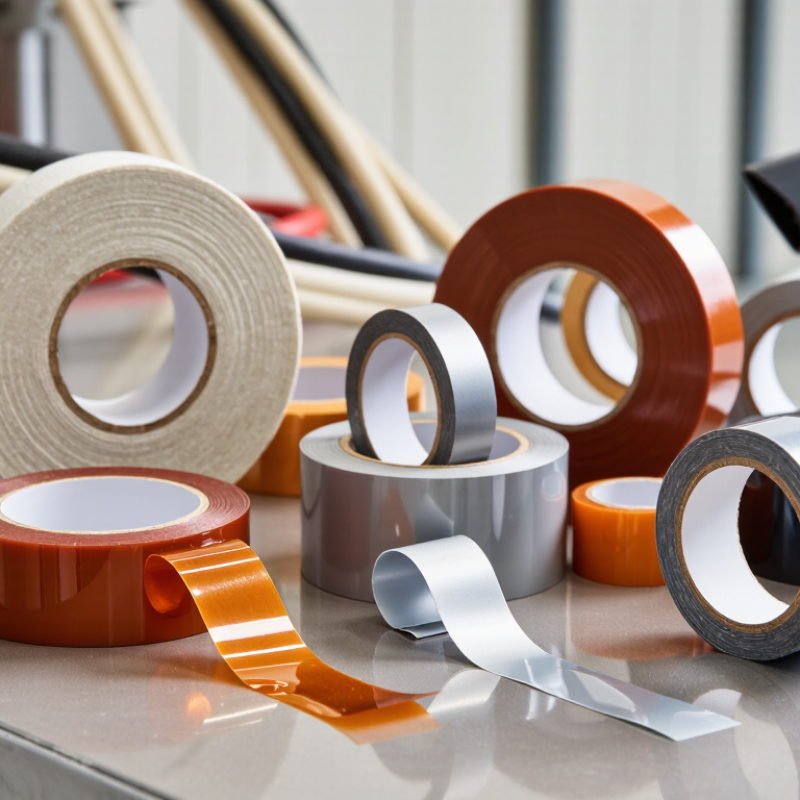 What Is Burn-Proof Tape and How Does It Work?China Top Burn Proof Tape Manufacturers How to Choose?
Burn-proof tape is designed to resist flame, heat, and brief contact with hot surfaces. It is not always fireproof. That difference matters.
Most versions use glass-fiber cloth, silicone, mica, or other heat-resistant layers. When exposed to heat, these materials slow burning and protect nearby insulation, wiring, or equipment surfaces. Some tapes also resist molten metal splashes, abrasion, and moisture. Their performance depends on temperature, exposure time, pressure, and surface condition. A tape rated for 260°C may fail during continuous exposure above that level.
During practical assembly evaluations, technicians should check adhesion after heating, not only the label. The tape should remain attached, without bubbling, cracking, or leaving excessive residue.
A reliable manufacturer should provide clear test data, thickness options, temperature ratings, and application guidance. Ask whether the product was tested with flame, radiant heat, or direct contact. These conditions are different. I would not trust a vague “burn-proof” claim alone. The wording can be convenient, but it may hide limitations.
Tips: Clean the surface first. Press the tape firmly. Avoid sharp wrinkles. Test a small sample before full installation.
Also inspect the tape after cooling. Some failures appear later, not during heating. Choosing a manufacturer means comparing evidence, consistency, and technical support, rather than selecting the lowest price.
Key Materials Used in High-Temperature Resistant Tape
China Top Burn Proof Tape Manufacturers: How to Choose?Key Materials Used in High-Temperature Resistant TapeChoosing burn-resistant tape starts with its material stack, not its appearance. Fiberglass cloth provides a strong, heat-stable carrier for wiring and equipment insulation. Silicone rubber coating adds flexibility and resists moisture, flame exposure, and sudden temperature changes. It remains useful when cables bend around sharp corners.Polyimide film is thinner and handles high temperatures with low electrical conductivity. It suits circuit protection, coil wrapping, and precision masking. PTFE offers low friction and chemical resistance, but it may lose mechanical strength under severe heat. Mica tape provides excellent thermal insulation and is often selected for fire-resistant cable systems. Ceramic fibers can tolerate extreme temperatures, although they may feel less flexible during installation.The adhesive matters as much as the backing. Acrylic adhesives usually offer cleaner aging and stable bonding, while silicone adhesives perform better across wider temperature ranges. A reliable manufacturer should provide test data, temperature limits, peel strength, and flame-resistance results. Ask whether those values apply after aging, not only before testing.A perfect tape does not exist. In practical evaluations, a strong tape can still fail on dusty metal or a rough edge. OEM Burn Proof Tape should match the actual substrate, heat cycle, pressure, and installation method. Small samples help reveal curling, residue, and weak adhesion before large-scale production. That step is easy to skip. It should not be.
Main Applications of Burn-Proof Tape in Different Industries
Main Applications of Burn-Proof Tape in Different IndustriesBurn-proof tape protects surfaces from heat, sparks, and short-term flame exposure. In electrical cabinets, technicians wrap cable joints, busbars, and sensor wires near hot terminals. IEC 60454 guidance helps assess pressure-sensitive electrical tapes. However, a tape’s temperature rating alone does not prove fire safety.Automotive and battery plants use heat-resistant tape around wiring, battery modules, and exhaust components. The International Energy Agency reported over 17 million electric cars were sold worldwide in 2024. That growth increases demand for reliable insulation during assembly. Aerospace workshops also use specialized tape for temporary masking and thermal protection. In construction, installers protect conduit and cable insulation near welding zones. NFPA data recorded about 1.5 million U.S. fires in 2023, showing why fire-resistant installation practices matter. Tape is only one control.Tips: Check continuous temperature, flame rating, dielectric strength, adhesive residue, and substrate compatibility. Request test reports, not only catalog claims. For an ODM Burn Proof Tape project, define the heat cycle, surface material, and peeling force before production. Small trials reveal problems early. A perfect tape does not exist. Humidity, vibration, and sharp edges can still cause failure. I have found that rushed sampling often hides these weaknesses. Recheck after aging, because fresh adhesive can perform better than aged adhesive.
China Top Burn Proof Tape Manufacturers How to Choose? – Main Applications of Burn-Proof Tape in Different Industries
| Industry | Main Application | Recommended Tape Construction | Typical Temperature Capability* | Important Performance Requirements | Manufacturer Selection Checks |
|---|---|---|---|---|---|
| Electrical and Electronics | Insulating coils, transformers, circuit boards, and wiring during soldering or heat treatment. | Polyimide film with silicone adhesive. | Approximately 180–260°C, depending on grade and exposure time. | Electrical insulation, clean removal, low adhesive residue, dimensional stability, and resistance to soldering heat. | Request dielectric-strength data, adhesive compatibility information, thickness tolerance, and aging test results. |
| Automotive | Protecting wiring, sensors, painted surfaces, and components during powder coating, painting, or engine-area assembly. | Polyimide,
© 2019 Copyright Carson City Headlines. All Rights reserved.
Designed by
 |

