
Las Vegas Longevity Expert Dr. Wallace Brucker Highlights Cellular Impact Chronic Stress
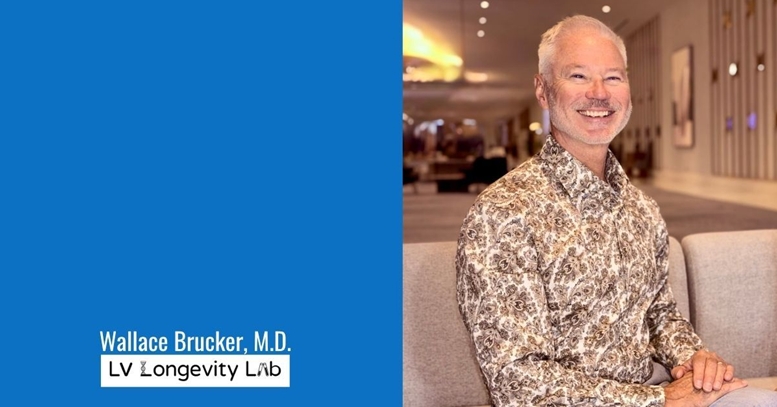
As “neurowellness” becomes the defining health trend of 2026, the Las Vegas longevity physician explains why chronic stress is a measurable driver of biological aging, and what patients can do about it
LAS VEGAS, NV — September 3, 2026 — Stress has long been treated as a purely emotional experience, something to simply push through. But the science of 2026 tells a different story. Chronic stress is now understood as a powerful, measurable driver of biological aging, one that quietly raises the risk of disease and accelerates decline at the cellular level. According to Dr. Wallace Brucker, medical director of LV Longevity Lab in Las Vegas, understanding and measuring the physical toll of stress may be one of the most important frontiers in longevity medicine.
From “Soft” Concern to Hard Science
For years, stress management was viewed as a lifestyle nicety rather than a medical priority. That view is rapidly changing. “Neurowellness,” the practice of measuring and regulating the nervous system, was named the leading wellness trend of 2026, reflecting a growing recognition that stress physiology has real, quantifiable effects on the body.
“We used to talk about stress as if it were only in your head, but it’s very much in your body, and in your cells,” said Dr. Brucker. “Chronic stress isn’t just an unpleasant feeling. It’s a physiological state that measurably damages the body over time. The exciting shift is that we can now move beyond vaguely telling people to relax, and instead measure what stress is actually doing to them.”
How Chronic Stress Ages the Body
The mechanisms linking chronic stress to aging are well established. When the body is under sustained stress, it keeps the stress hormone cortisol elevated, and the nervous system remains locked in a prolonged “fight or flight” state. Over time, this takes a serious toll.
Chronically elevated cortisol and nervous-system dysregulation drive inflammation, disrupt blood sugar regulation and contribute to insulin resistance, impair sleep, and strain the cardiovascular system. The effects reach all the way down to our DNA: chronic stress has been linked to the shortening of telomeres, the protective caps on our chromosomes whose length is a marker of biological aging.
“The data here is striking,” Dr. Brucker said. “Research has found that people with a less adaptive stress response can have up to three times the risk of dying from cardiovascular disease compared to those with healthier stress physiology. Stress is not a minor factor. It sits upstream of inflammation, metabolic dysfunction, poor sleep, and hormonal imbalance, the very things that accelerate aging.”
Making the Invisible Visible
What makes Dr. Brucker’s approach distinct is his emphasis on measurement. Rather than treating stress as an abstract complaint, he assesses its physical fingerprints directly.
“You can’t manage what you don’t measure,” he said. “Stress leaves a measurable signature in the body, and that’s what we look for. When we can show a patient objectively what chronic stress is doing to their hormones, their inflammation, and their metabolism, it transforms the conversation. It becomes a concrete, medical issue we can actually address, not just advice to ‘slow down.'”
At LV Longevity Lab, this includes advanced hormone testing such as the DUTCH test, which maps a patient’s cortisol patterns throughout the day and reveals how their stress-response system is functioning, alongside markers of inflammation and metabolic health. Together, these paint a detailed picture of how chronic stress is affecting the individual.
A Special Warning for High Achievers
Dr. Brucker notes that the people most affected are often those least likely to slow down, driven executives and professionals who wear chronic stress as a badge of honor.
“High performers frequently normalize a level of chronic stress that is quietly aging them,” he said. “They assume that because they’re functioning, they’re fine. But the physiological damage accumulates silently. Measuring it is often the wake-up call that allows them to protect their health, and their performance, for the long term.”
From Measurement to Resilience
Once testing reveals how stress is affecting a patient, Dr. Brucker builds a personalized plan to restore balance and resilience. Depending on the individual, this may include correcting the cortisol and hormonal imbalances stress creates, reducing inflammation, optimizing sleep, and supporting the body’s metabolic health, addressing the downstream damage while helping the nervous system recover.
“The goal is to build genuine physiological resilience, not just to feel calmer, but to measurably reduce the toll stress is taking,” Dr. Brucker said. “When we do that, patients often experience better sleep, steadier energy, improved mood, and better metabolic and cardiovascular health. We’re protecting them at the deepest level, right down to how their cells age.”
A Proactive Approach to Modern Life
For Dr. Brucker, addressing stress physiology is a natural extension of proactive, root-cause medicine.
“Chronic stress is one of the defining health challenges of modern life, and for too long we’ve treated it as unavoidable,” he said. “But when we measure it and address its physical effects, we give people real power over one of the biggest accelerators of aging. That’s exactly what proactive longevity medicine should do.”
About Dr. Wallace Brucker and LV Longevity Lab
Dr. Wallace Brucker is a West Point graduate, board-certified orthopedic surgeon, and fellowship-trained longevity physician who serves as medical director of LV Longevity Lab in Las Vegas. With more than three decades in medicine, he brings a proactive, root-cause approach to helping patients optimize their health, performance, and longevity.
Media Contact
Company Name: LV Longevity Lab
Contact Person: Margaret Brucker, PA-C
Email: Send Email
Phone: (702) 478-3369
Address:4315 Dean Martin Dr, Unit 230E, Las Vegas, NV 89103
Country: United States
Website: https://lvlongevitylab.com/


