
Analysis of the Musical Fountain Industry and Market Development Trends in 2026
Foshan,Guangdong,China-October 14,2026
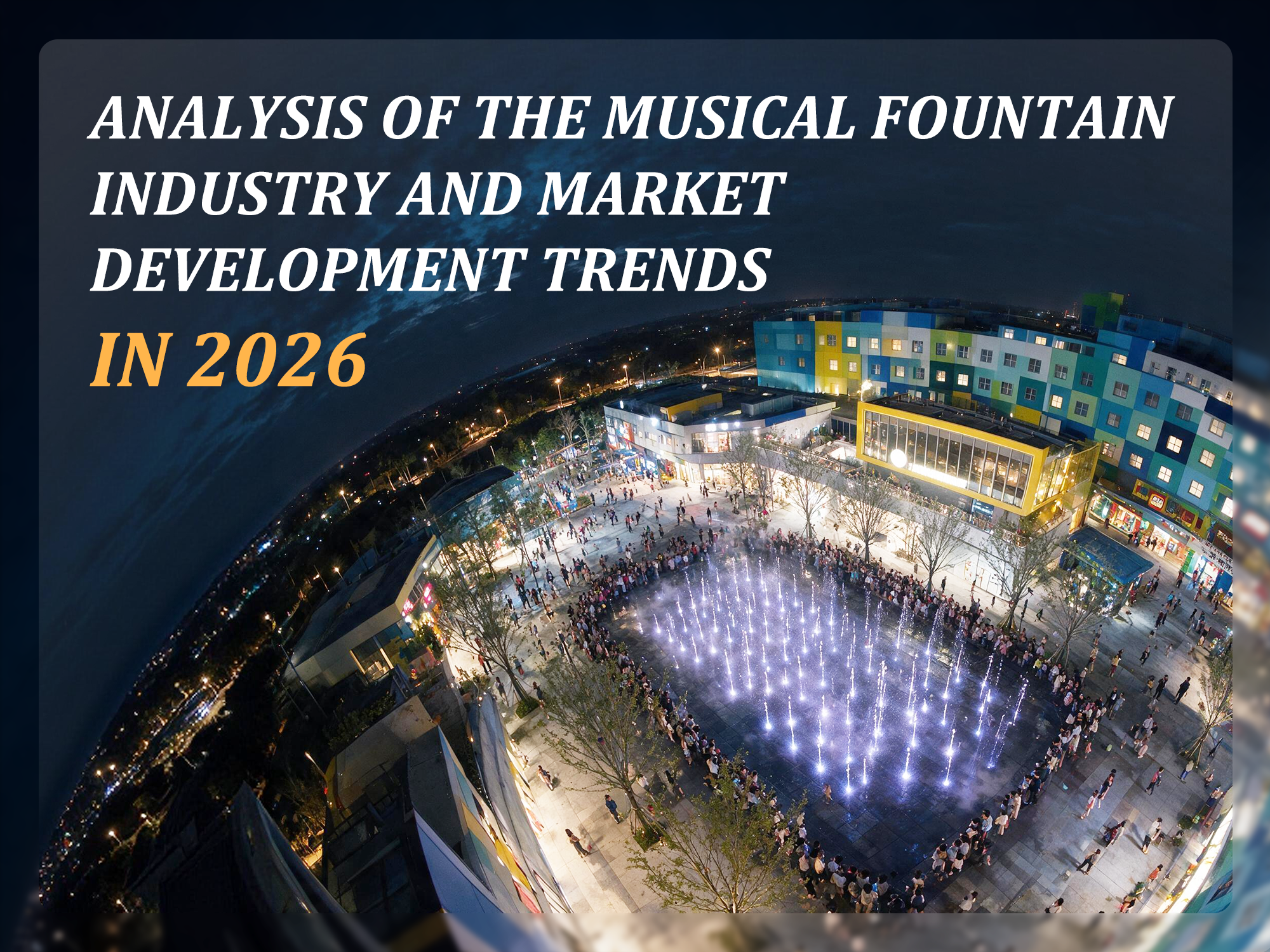
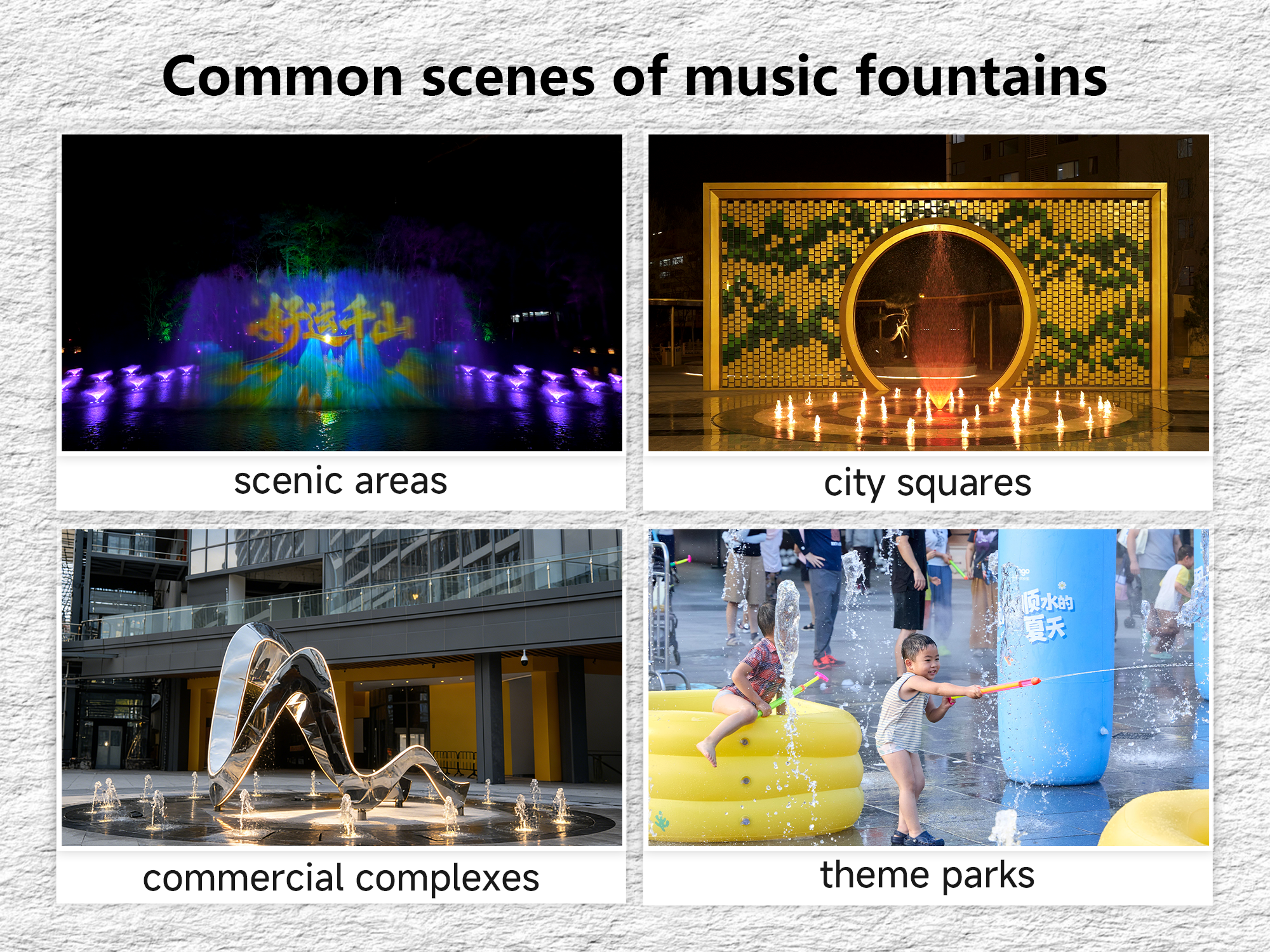
I. Industry OverviewMusical Fountain is a comprehensive landscape engineering project that integrates water features, automated control systems, lighting, audio systems, digital media, and artistic creativity. Compared with traditional static fountains, Musical Fountains can synchronize water jets, pumps, lighting effects, and visual content according to music rhythm and programmed performances, creating an immersive audiovisual experience.In recent years, the role of Musical Fountains has gradually expanded from simply beautifying urban environments to becoming important tools for landmark creation, cultural tourism development, commercial space marketing, and nighttime economy promotion. Driven by the growth of cultural tourism integration and night-time consumption, Musical Fountains have become increasingly common in scenic areas, city squares, commercial complexes, theme parks, and public entertainment spaces.It should be noted that public market research reports do not always use the same definition of the “Musical Fountain market.” Some studies focus on fountain equipment, while others include water show engineering, control systems, multimedia water performances, and landscape projects. Therefore, market size estimates from different research organizations may vary significantly, and related data should always be evaluated based on their specific statistical scope and methodology.
II. Market Development in 20261. Global Market Continues to GrowSome market research data indicates that the global Musical Fountain market was valued at approximately USD 2.38 billion in 2025 and is expected to reach around USD 3.49 billion by 2032, representing a compound annual growth rate (CAGR) of approximately 5.6% between 2025 and 2032.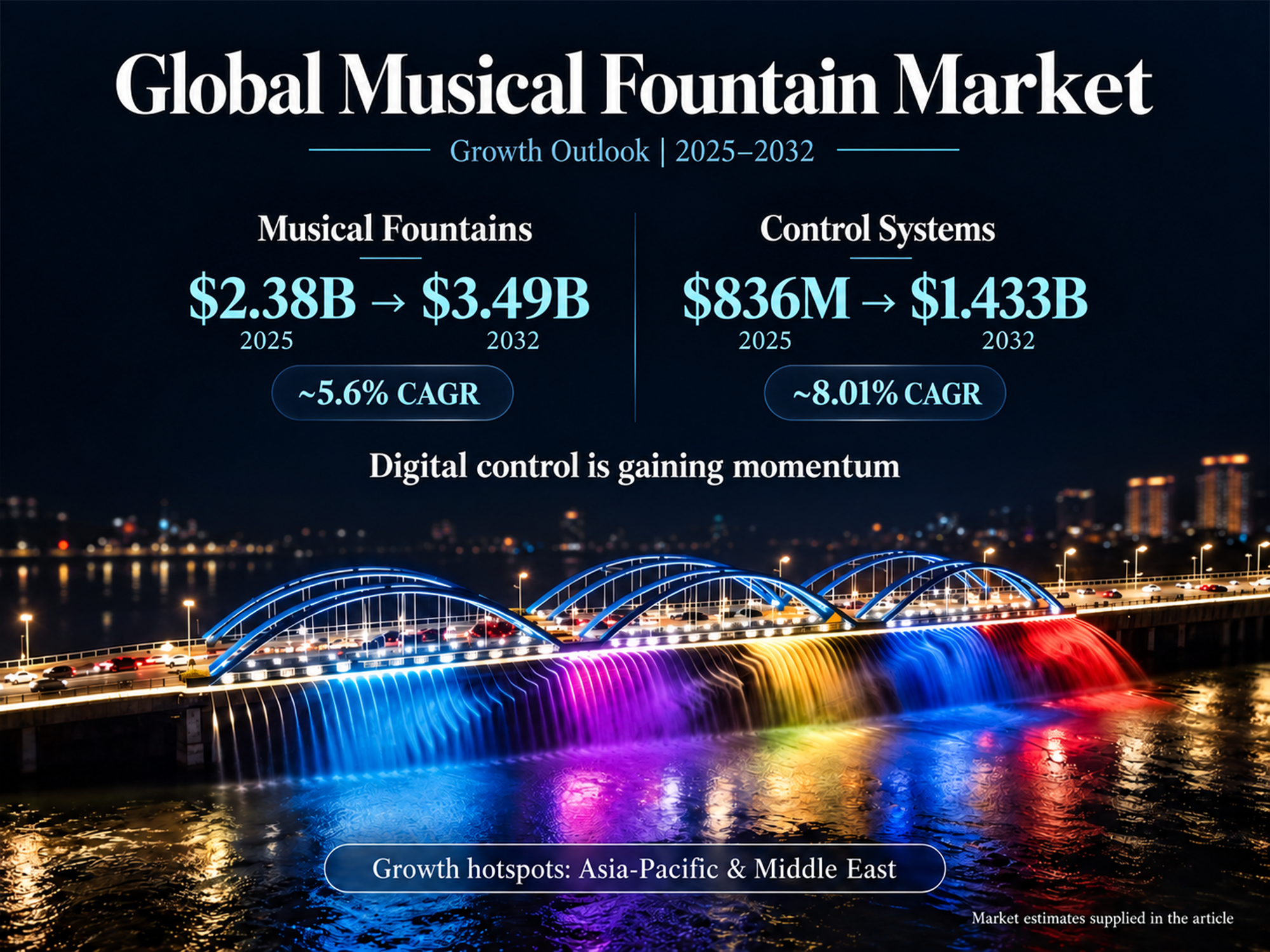 Other studies analyze The Musical Fountain control system as an independent market segment, estimating that its market size may increase from approximately USD 836 million in 2025 to USD 1.433 billion by 2032, with a CAGR of around 8.01%.This indicates that compared with traditional components such as nozzles and pumps, digital control technologies, synchronized programming, and intelligent operation systems are becoming increasingly important drivers of industry growth.From a regional perspective, the Asia-Pacific market continues to show strong potential due to urban development, cultural tourism investment, commercial complex expansion, and the growth of nighttime economy initiatives. Markets including China, Southeast Asia, and the Middle East are creating increasing opportunities for Musical Fountain manufacturers through large-scale tourism projects and urban landscape developments.2. China’s Market Demand Is Becoming More DiverseThe demand for Musical Fountains in China is expanding across multiple application scenarios, including urban landscape upgrades, cultural tourism destinations, nighttime tourism projects, commercial complexes, hotels and resorts, theme parks, and urban nightscape developments. In addition, the renovation of existing fountain projects through energy-saving upgrades and smart control system improvements is becoming an increasingly important market opportunity.In 2026, market demand is shifting from simply “building a fountain” toward creating sustainable nighttime experience projects. Project owners are no longer focusing only on the scale of the fountain or its initial visual impact but are paying more attention to the overall value throughout the project lifecycle.Key evaluation factors now include performance content updates, visitor engagement, commercial conversion potential, operating costs, and long-term maintenance requirements. This means that modern Musical Fountain Projects are increasingly expected to deliver continuous attraction, operational efficiency, and long-term economic value rather than serving as one-time landscape installations.
III. Key Market Drivers1. Continued Growth of Nighttime Cultural Tourism ConsumptionNighttime consumption has become an increasingly important part of the tourism economy. In 2026, the continued growth of nighttime tourism demand, particularly among younger consumers, is creating new opportunities for experience-based attractions and entertainment projects.This trend provides a favorable environment for musical fountains, which combine scheduled performances, strong visual appeal, and public engagement. By integrating water effects, lighting, music, projection, and storytelling, musical fountains can become key attractions in night tourism destinations, commercial spaces, cultural events, and immersive entertainment projects.As cities and tourism operators continue to develop nighttime experiences, musical fountains are increasingly valued not only as landscape features but also as tools for extending visitor stay time, enhancing atmosphere, and driving local consumption.2. Cultural Tourism Projects Are Shifting from “Sightseeing” to “Experience”Modern tourists are no longer satisfied with simple sightseeing. They increasingly seek participation, immersion, interaction, and shareable experiences.When water, light, music, projection, and storytelling are integrated together, musical fountains can transform from traditional landscape features into immersive cultural tourism experiences with strong emotional and entertainment value. In 2026, immersive, interactive, and multi-sensory tourism performances continue to expand, reflecting a broader trend toward experience-driven tourism development. With their natural visual appeal and strong audience attraction capability, musical fountains are becoming an important medium for creating immersive cultural tourism experiences.3. Urban Renewal Creates Opportunities for Fountain RenovationBesides new construction projects, urban renewal is creating a growing market opportunity for the renovation and modernization of existing fountain systems.Many older fountain projects are facing challenges such as aging equipment, high energy consumption, outdated control technologies, limited performance content, and inefficient water management. As cities upgrade public spaces and improve visitor experiences, fountain renovation is becoming an important way to extend project value and improve operational efficiency.Future upgrades will focus on replacing outdated mechanical systems with high-efficiency pumps and variable-frequency controls, improving LED lighting and digital control systems, introducing remote monitoring and fault diagnosis, and optimizing water circulation and treatment systems. At the same time, many projects will refresh their performance content by redesigning music programs, water effects, and interactive experiences to meet changing audience expectations.Through systematic modernization, existing fountains can achieve better visual performance, lower operating costs, improved reliability, and a longer service life, creating new value from previously developed urban landscape assets.
IV. Technology Development Trends
1. Intelligent Control and Remote Operation & MaintenanceThe core competitiveness of musical fountains is gradually shifting from traditional mechanical equipment toward digital control capabilities. In 2026, technologies such as PLC control, DMX512 systems, digital audio synchronization, multimedia servers, and IoT sensors will become increasingly important in modern fountain projects.Smart control systems enable more precise coordination between water effects, lighting, music, and multimedia content while supporting automated performance scheduling, real-time equipment monitoring, and remote fault diagnosis. By analyzing operational data such as water levels, pressure, and system conditions, these technologies help improve reliability, reduce manual management requirements, and optimize long-term operating efficiency.Beyond automation, the integration of AI, IoT, interactive technologies, energy-efficient solutions, and modular system design is expected to further accelerate the digital transformation of the musical fountain industry.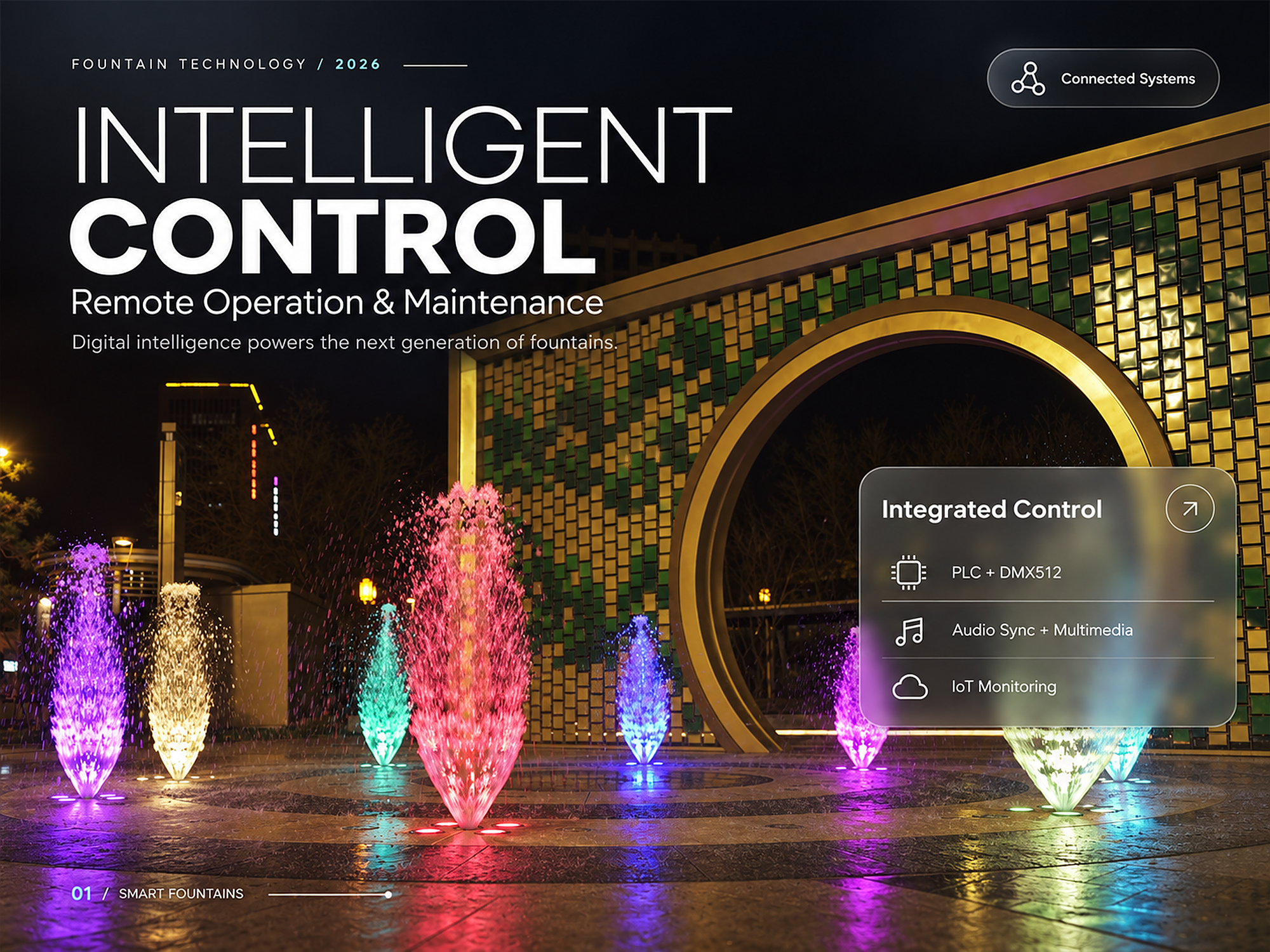 2. AI and Data-Driven ApplicationsArtificial intelligence is still at an early stage of adoption in the musical fountain industry, but it has significant potential to improve creativity, efficiency, and operational management.In the future, AI may assist with areas such as automated water and lighting programming, performance optimization based on visitor behavior, equipment condition analysis, and the creation of digital visual content. By combining AI with operational data, fountain systems could achieve more intelligent scheduling, predictive maintenance, and more personalized performance experiences.However, AI will not replace the essential role of engineering expertise, artistic creativity, and on-site commissioning. The quality of a large-scale musical fountain project still relies on professional hydraulic design, reliable equipment manufacturing, creative show production, precise installation, and long-term operation capabilities.Therefore, AI should be viewed as an enhancement tool that supports engineers and designers, helping improve productivity and innovation while maintaining the importance of human expertise in complex fountain projects.3. Energy Efficiency, Water Conservation, and Environmental ProtectionAs sustainability requirements continue to grow, energy consumption and water management have become increasingly important considerations in large-scale musical fountain projects. Future fountain designs will focus on achieving a balance between visual impact, operational efficiency, and environmental responsibility.Energy-saving strategies will involve the optimization of the entire fountain system, including high-efficiency pumps, variable frequency control, intelligent zoning, advanced water treatment, low-power LED lighting, and real-time monitoring of operating performance. These technologies help reduce energy consumption, improve water utilization, and enhance long-term system reliability.Green fountain design not only lowers operating costs but also supports the sustainability goals of urban development projects and cultural tourism destinations. As a result, future competition in the fountain industry will increasingly depend on lifecycle cost management, environmental performance, and overall operational efficiency rather than visual scale alone.4. Integration with Multimedia TechnologiesIn 2026, musical fountains will increasingly evolve through integration with multimedia entertainment technologies, combining water effects with digital content, visual arts, and immersive performance elements. Technologies such as water screen projection, laser shows, projection mapping, drone performances, AR-based visual experiences, and live stage elements are becoming increasingly common in large-scale water show projects.As the industry develops, competition is gradually shifting away from simply pursuing higher water jets or adding more equipment. The value of a successful musical fountain project will increasingly depend on its ability to create engaging stories, deliver unique artistic experiences, connect with audiences, and continuously update performance content.A modern musical fountain is no longer just a landscape feature, but a comprehensive multimedia performance platform that integrates engineering, technology, creativity, and cultural expression.
V. Major Application Scenarios
| Application Scenario | Main Functions | Future Development Focus |
|---|---|---|
| Urban Squares | City image presentation, public events, festivals | Public safety, energy efficiency, stable operation |
| Cultural Tourism Destinations | Night tourism performances, visitor attraction, social media engagement | Themed content, performance frequency, tourism revenue conversion |
| Commercial Complexes | Customer attraction, brand marketing, consumer experience | Interactivity, communication value, return on investment |
| Theme Parks | Immersive entertainment and scheduled performances | Story design, equipment reliability, continuous program updates |
| Hotels and Resorts | Landscape enhancement and brand image improvement | Design quality, water quality management, noise control |
| Urban Renewal Projects | Modernization of existing fountain systems | Energy-saving upgrades, control system replacement, maintenance improvement |
| Large Events | Temporary performances and visual showcases | Fast installation, efficient commissioning, safety management |
VI. Competitive Landscape of the Industry
The musical fountain industry involves a wide range of participants across the value chain, including fountain equipment manufacturers, landscape design firms, engineering contractors, multimedia water show companies, and technology providers specializing in lighting, audio, and intelligent control systems.As musical fountains become more integrated with digital technology and immersive experiences, competition is no longer limited to equipment supply. Companies are increasingly required to provide comprehensive capabilities covering creative planning, system integration, engineering delivery, smart operation, and long-term project services.Creative planning capability is becoming increasingly important as projects move beyond simple water displays toward immersive experiences. Companies need to integrate local culture, tourism themes, brand concepts, and commercial objectives into fountain designs to create meaningful and memorable experiences.System integration capability is essential because modern musical fountains combine multiple technologies, including hydraulic systems, electrical control, lighting, audio synchronization, digital programming, and multimedia applications. Strong integration capabilities ensure stable coordination between water, light, sound, and visual effects.Engineering delivery capability directly affects project success. Large-scale fountain projects require reliable manufacturing, installation management, construction coordination, efficient commissioning, and effective risk control to ensure quality and performance.Intelligent technology capability is becoming a key competitive advantage as digital transformation accelerates. Remote monitoring, smart maintenance, data analysis, and digital program management can improve operational efficiency while reducing long-term maintenance costs.Energy-saving design capability will play a greater role in future project decisions. Fountain companies need to achieve a balance between visual impact and operational efficiency through optimized pumps, water management, lighting systems, and lifecycle cost control.Long-term operation capability is also becoming increasingly valuable. Successful fountain projects require continuous technical support, maintenance services, spare parts supply, and performance updates to maintain long-term attraction and operational value.Overall, the musical fountain industry is moving from equipment-based competition toward comprehensive competition based on:Creative Design + Engineering Delivery + Digital Control + Content Operation + Lifecycle ServiceCompanies capable of providing complete project solutions will have stronger advantages than those focusing only on individual products or equipment supply.
VII. Industry Challenges1. Inconsistent Market Data StandardsOne challenge facing the musical fountain industry is the lack of consistent market definitions and statistical standards. Different research organizations may classify the industry differently, with some focusing on fountain equipment manufacturing while others include water show engineering, control systems, multimedia performances, or complete landscape solutions.As a result, market size estimates, growth rates, and regional analysis may vary significantly. When evaluating industry data, companies should consider the research scope, data sources, measurement methods, and market boundaries to avoid confusing equipment markets with the broader water show and landscape engineering industry.2. Long Investment Return PeriodsLarge-scale musical fountain projects often require significant upfront investment, while long-term operation also involves costs related to energy consumption, water management, maintenance, technical support, and content updates.Without effective operational planning, some projects may experience strong public attention after launch but gradually lose visitor attraction over time. Therefore, future fountain projects need to focus not only on construction quality but also on sustainable operation, continuous content innovation, audience engagement, and commercial value creation. A successful musical fountain should be developed as a long-term experience platform rather than a one-time landscape installation.3. Increasing Homogenization of ProjectsAs more musical fountain projects enter the market, differentiation has become an increasingly important challenge. Some projects still rely heavily on similar music programs, repeated lighting effects, and standard water patterns, resulting in limited uniqueness and weak emotional connection with audiences.Future competition will depend more on creative concepts, cultural storytelling, interactive experiences, and continuous content updates. Projects that successfully combine technology with local identity and meaningful narratives will have stronger long-term attraction.4. Higher Requirements for Safety and Environmental ProtectionWith increasing public expectations and stricter environmental standards, safety and sustainability have become essential considerations in fountain project development.Modern projects must address factors such as electrical protection, structural safety, water quality management, noise control, energy efficiency, and environmental impact. For interactive fountains, additional attention is required for user safety through proper space planning, emergency systems, and operational management.Professional design, reliable engineering, and ongoing maintenance are critical to ensuring safe, stable, and sustainable fountain operation throughout the project lifecycle.
VIII. Future Development OutlookOverall, the musical fountain industry in 2026 is entering a new stage driven by technological innovation, diversified applications, and evolving customer expectations.Future development will focus on the transformation from traditional landscape displays to immersive experience platforms. Musical fountains are increasingly integrating water effects, lighting, sound, digital media, and storytelling to create more engaging experiences for cultural tourism destinations, commercial spaces, hotels, resorts, and entertainment venues. At the same time, the market is expanding beyond large landmark projects, with more customized and medium-scale applications emerging across different scenarios.Another major trend is the shift from one-time construction projects toward long-term operation and intelligent management. Project owners are paying more attention to content updates, visitor engagement, operational efficiency, and lifecycle value. Smart control systems, IoT monitoring, remote diagnostics, and predictive maintenance will help improve reliability while reducing long-term operating costs.Sustainability will also become an important direction for future development. Energy-efficient equipment, water-saving technologies, optimized operation strategies, and lifecycle management will help fountain projects achieve a better balance between visual performance, environmental responsibility, and economic efficiency.Meanwhile, industry competition will continue to move away from simple equipment and price competition toward comprehensive solution capabilities. Companies with strengths in creative design, engineering delivery, digital technology, content development, and after-sales services will have stronger advantages in the future market.
ConclusionIn 2026, the musical fountain industry remains in a period of technological transformation and market expansion. The growth of nighttime cultural tourism, urban renewal projects, commercial experience marketing, and immersive entertainment continues to create new opportunities for industry development.At the same time, intelligent control systems, AI-assisted content creation, energy-efficient solutions, and multimedia integration are transforming musical fountains from traditional landscape engineering projects into digital experience platforms.Future success will not depend only on higher water jets, brighter lighting, or more complex equipment. The most competitive projects will be those that combine:Safety + Energy Efficiency + Sustainable Operation + Cultural Creativity + Digital TechnologyA truly valuable musical fountain is not only a visual attraction, but also a long-term experience solution that creates cultural impact, strengthens visitor engagement, and delivers sustainable operational value.As a professional musical fountain manufacturer and integrated solution provider, Davis Fountain follows this industry direction by combining creative design, engineering expertise, intelligent control technology, and project execution capabilities. Through customized fountain solutions, multimedia integration, and lifecycle service support, Davis Fountain aims to help global clients create reliable, immersive, and sustainable water experiences for cultural tourism, commercial spaces, hotels, and urban landmarks.
About us
Davis Fountain is a professional music fountain and dancing fountain manufacturer and waterscape system solution provider serving commercial real estate, cultural tourism, and large-scale night show projects. We deliver one-stop solutions from concept design to final project delivery.
Our predecessor, Guangzhou Runjing Fountain Group, was founded in 1990 and is among the earliest professional enterprises in China specializing in fountain system design, R&D, equipment manufacturing, and global project implementation. For over three decades, we have been committed to delivering reliable, controllable, and long-term value-oriented waterscape solutions to developers, owners, and contractors.
Media Contact
Company Name: Davis Fountain Equipment (Guangdong) Co., Ltd.
Contact Person: Media Relations
Email: Send Email
Country: China
Website: https://www.daviswaterscape.com/


