
Key Factors Shape Mini Grid System Selection for 2026 Projects
Shenzhen , Guangdong, China-November 5, 2026
So, choosing a Mini Grid System in 2026? It’s not just about comparing solar panels, batteries, and who gives you the best price. You’ve got to match the design to what the local community actually needs, what resources are around, how much reliability people expect, and—maybe most importantly—who’s going to handle the day-to-day operations. A clinic, for instance, can’t afford to be in the dark after sunset. A small mill might need a solid daytime supply, plus some room to grow.So, there’s this 2019 report from the World Bank and ESMAP called Mini Grids for Half a Billion People. It projected that mini-grids could bring power to half a billion people by 2030—which would mean something like 217,000 systems and around $220 billion in investment. But here’s the thing: those are projections, not actual installed systems. And that distinction really matters. Because once you’re out in the field, things don’t always go as planned. Demand might grow slower than expected, maintenance can be a real headache, and battery replacement costs? Yeah, those can blow way past what early budgets assumed.There’s a useful lesson in Dr. Rebekah Shirley’s research on energy access. It’s not just about the specs of the equipment—you have to design around what people actually need and can maintain. That’s a solid guiding principle, though it’s hardly a guarantee. In this guide, we’ll walk through system architecture, generation mix, storage, load assessment, costs, and after-sales support. And keep an eye on the details: things like a water pump’s starting load, how long spare parts take to arrive, or when evening peak demand hits can totally flip your decision. Look, some inputs are just going to be uncertain. You should be upfront about them, then see how the design holds up when demand goes off in a different direction than you forecast.
Understanding Mini Grid Systems and Their Role in 2026
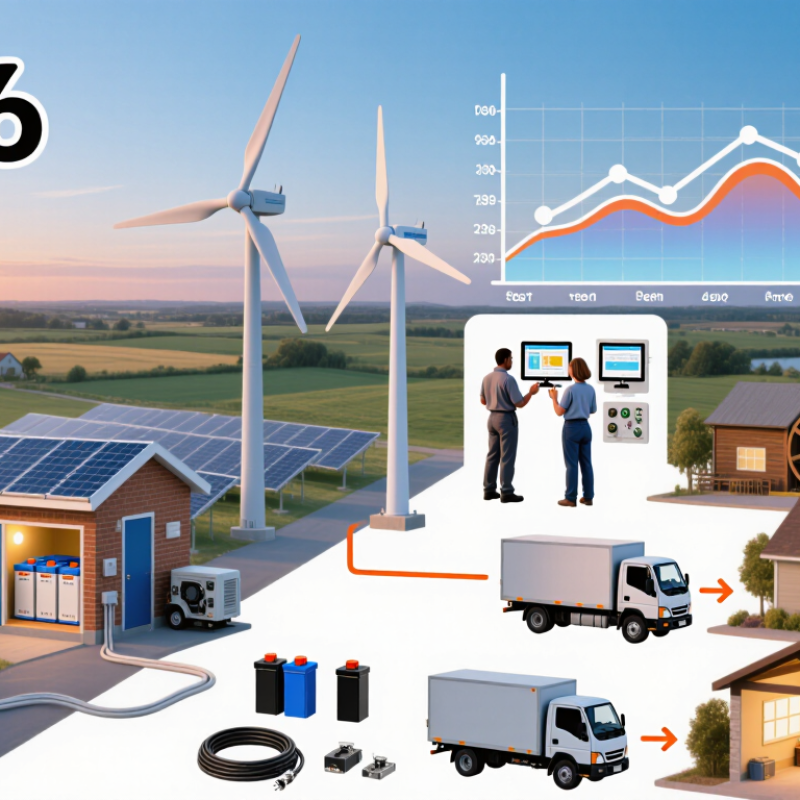
A mini grid is a local electricity network that serves homes, businesses, or public facilities, often where the main grid is unavailable or unreliable. It can combine solar panels, batteries, and backup generation with lines, meters, and control equipment. The exact mix depends on local resources and demand. A Mini Grid Power System is more than its generators; distribution, maintenance, and billing also shape whether electricity remains dependable.
2026 choosing a system starts with careful observation, not a catalogue. Record when households use power, which appliances they need, and how demand may change as shops or clinics grow. A small clinic’s vaccine refrigerator has different needs from evening phone charging. Reliability matters. Ask who will inspect batteries, repair damaged lines, and explain tariffs to customers. These details can be less exciting than panels, but they determine daily performance. Storage can cover cloudy periods, yet batteries add cost and require suitable handling. That trade-off deserves honest attention. Demand forecasts are imperfect, too; I would leave room for revision rather than pretend the first estimate is exact.
Assessing Energy Needs, Users, and Site Conditions
Choosing a Solar Mini Grid System in 2026 starts with people, not panels. The 2024 Tracking SDG7 report estimated that 685 million people lacked electricity in 2022. Yet connection numbers alone do not define demand. Interview households, clinics, schools, shops, and water-pumping operators separately. Record appliance wattage, operating hours, seasonal use, and acceptable outage periods. A clinic needs dependable refrigeration. A shop may need evening lighting and phone charging. These loads behave differently.Build an hourly load profile from measurements whenever possible. Short surveys often miss televisions, welding tools, irrigation pumps, and future business growth. The World Bank’s Mini Grids for Half a Billion People report highlights productive-use demand as essential for mini-grid viability. Size for today, but reserve space for tomorrow. A spreadsheet can still lie.Site conditions can quietly change the design. Check solar irradiation, roof or ground shading, soil strength, flood exposure, transport access, and battery ventilation. The Global Solar Atlas provides location-based solar resource data, while IRENA’s Renewable Capacity Statistics 2024 recorded 473 GW of new solar capacity worldwide in 2023. Strong resource data is useful, but local dust and clouds may reduce output. Measure them.Compare battery autonomy with critical loads, not total consumption. Ask whether users can pay reliably during low-income months. Then test the design against cloudy weeks, pump starts, maintenance delays, and population growth. I would revisit the assumptions after the first operating season. Real communities rarely match the first survey.
Comparing Generation Sources and System Configurations
How to Choose a Mini Grid System in 2026?Comparing Generation Sources and System ConfigurationsChoosing a mini grid starts with the local energy pattern, not a catalog. Solar can serve sunny sites, while small hydro may provide steadier output where water flows reliably. Wind can help in exposed locations, but seasonal changes and maintenance needs matter. Diesel or another fuel-based generator can provide backup, though fuel delivery adds ongoing cost and logistical risk. Measure demand across the day, including evening lighting, refrigeration, and workshop equipment. A few weeks of readings are better than guesses.System configuration shapes reliability. A battery-based setup can store daytime generation for evening use, but battery capacity should match actual loads and expected cloudy periods. Hybrid systems combine sources, such as solar with hydro or a backup generator. They can reduce dependence on any single resource, yet controls and servicing become more complex. Plan for future connections, too. Adding homes later may require larger conductors, protection devices, and generation capacity. This is easy to overlook.Tips: Record peak and daily energy demand. Check seasonal resource data, site access, and local repair skills. Ask a qualified electrical professional to review protection, grounding, and load estimates. Leave room for uncertainty; real demand often grows after installation. A technically neat design can still disappoint if replacement parts are difficult to obtain.
How to Choose a Mini Grid System in 2026?
Comparing generation sources by median life-cycle greenhouse gas emissions
Median life-cycle emissions are approximately 48 g CO₂-eq/kWh for solar PV, 11 for wind, 24 for hydropower, and 490 for natural gas. These are technology-level estimates, not mini-grid-specific guarantees. Local resource availability, storage needs, backup generation, and operating strategy all affect system design and performance. Source: IPCC Fifth Assessment Report, Working Group III, Annex III.
Sizing Batteries, Inverters, and Distribution Networks
Choosing a Mini Off Grid Solar System in 2026 starts with measured demand, not panel size. Record each appliance’s watts, running hours, and starting surge. A small refrigerator may draw 100 watts while operating, but several times more during startup. Add daily energy use, then include 20–30% for wiring losses, dust, aging, and cloudy days. The International Energy Agency’s Batteries and Secure Energy Transitions report estimates that global battery storage must reach about 1,500 GW by 2030, six times current capacity. This highlights storage’s growing importance.Size the battery for usable energy, not its label. A 5 kWh battery may provide only 4 kWh after applying an 80% depth-of-discharge limit. For two autonomy days, multiply daily consumption by two, then divide by usable capacity. Choose an inverter above continuous demand, with enough surge capacity for pumps, compressors, or power tools. Distribution networks also matter. Keep high-current cables short, use suitable conductor sizes, and place fuses near the battery. Voltage drop can quietly reduce performance.Tips: Measure actual loads for seven days. Leave expansion space. I once sized a cabin system from estimated lighting use, and the winter battery bank failed early. The mistake was not dramatic; it was incomplete data. Review seasonal demand, battery temperature, and future appliances before final selection. NREL guidance on standalone photovoltaic systems also stresses load assessment, safety margins, and system losses. Even careful designs need revision.
How to Choose a Mini Grid System in 2026? – Sizing Batteries, Inverters, and Distribution Networks
| Design Dimension | Planning Metric | Typical Design Range or Reference Value | Recommended Sizing Method | Key Engineering Notes |
|---|---|---|---|---|
| Community Load | Daily electricity demand | Small systems: 50–500 kWh/dayMedium systems: 0.5–5 MWh/day | Use at least 12 months of measured data where available; otherwise model demand by appliance, operating hours, season, and expected growth. | Separate residential, commercial, productive, water-pumping, and public-service loads. |
| Peak Demand | Maximum coincident power | Often 2–5 times the average continuous load in rural systems | Calculate the maximum simultaneous demand and add motor-starting requirements. | Do not size the inverter from daily energy alone. Water pumps, refrigeration, and workshop motors can create short-duration surges. |
| Demand Growth | Design horizon and annual growth | 10–20 years; commonly model 3–7% annual demand growth | Apply scenario analysis: conservative, expected, and high-growth cases. | Include new households, productive-use equipment, cooling demand, electric cooking, and electric mobility where relevant. |
| Battery Chemistry | Usable energy and cycle life | Lithium-based batteries: commonly 80–90% usable depth of dischargeLead-acid batteries: commonly 50% usable depth of discharge | Compare total cost over life, usable capacity, temperature performance, maintenance, and recycling requirements. | The battery management system, thermal protection, ventilation, and fire-safety provisions are part of the storage design. |
| Battery Capacity | Nominal storage energy | Typical autonomy: 0.5–2 days for solar-led systems; longer where backup reliability is critical | Nominal battery capacity = required load energy × autonomy ÷ (usable depth of discharge × system efficiency). | Example: 300 kWh/day × 1.5 days ÷ (0.8 × 0.9) ≈ 625 kWh nominal battery capacity. |
| Battery Power Rating | Charge and discharge power | Usually sized for the maximum discharge load plus reserve; charge rate depends on battery limits and renewable output | Check continuous power, short-term surge power, C-rate, and simultaneous charging and discharging constraints. | Energy capacity in kWh and power capacity in kW are separate specifications. |
| Solar Generation | Photovoltaic array capacity | Common starting point: 1.2–1.8 times average daily load divided by effective solar hours | Use site-specific solar-resource data and model the lowest-sun season, not only the annual average. | Include temperature, dust, wiring, inverter, mismatch, and availability losses; total losses commonly require a 10–20% design allowance. |
| Inverter Capacity | Continuous AC output | Maximum coincident load × 1.15–1.25 design margin | Size for continuous output, overload duration, motor starting, ambient temperature derating, and future expansion. | Use modular inverter units when staged expansion, maintenance without total shutdown, or redundancy is important. |
| Inverter Surge | Short-duration overload capability | Commonly าย1.5–2.5 times rated power for a few seconds, subject to equipment specifications | Calculate starting current for motors and compressors rather than relying on a generic surge assumption. | Soft starters, variable-speed drives, or load sequencing can reduce required inverter oversizing. |
| Backup Generation | Dispatchable supply contribution | Often 25–100% of peak load, depending on reliability target and renewable resource | Use a generator or other firm source for prolonged cloudy periods, emergency loads, or battery preservation. | Model fuel logistics, minimum loading, emissions, maintenance, noise, and operating hours. |
| Distribution Voltage | Low-voltage and medium-voltage network selection | Low voltage for short local feeders; medium voltage is generally more efficient for longer distances or higher loads | Compare voltage drop, conductor cost, protection requirements, transformer losses, and future capacity. | The selected voltage must comply with local electrical regulations and utility interconnection rules. |
| Feeder Voltage Drop | Percentage voltage reduction | Common design target: ≤3% on a feeder; total installation limits are often around 5%, subject to local code | Calculate using conductor resistance, reactance, route length, current, power factor, and temperature. | Long rural feeders may require larger conductors, higher distribution voltage, local transformers, or distributed generation. |
| Network Losses | Energy lost in distribution | Target design allowance: approximately 5–10% for a well-designed small network | Estimate technical losses from conductor loading, transformer efficiency, feeder length, and load diversity. | Commercial losses require metering, service connections, inspections, and clear connection policies. |
| Load Diversity | Coincidence of customer demand | Apply a measured or modeled diversity factor rather than assuming every connected load operates simultaneously | Build an hourly load profile and calculate coincidence by customer class and time of day. | Avoid excessive oversizing while preserving capacity for critical loads and planned growth. |
| Reliability Target | Service availability and critical-load support | Define separate targets for homes, businesses, health facilities, water systems, and communications | Set maximum outage duration, reserve energy, black-start capability, and priority-load rules. | Critical loads should have dedicated circuits or a clearly defined load-shedding hierarchy. |
| Protection and Safety | Electrical, thermal, and operational protection | Include overcurrent, short-circuit, surge, grounding, isolation, anti-islanding, and battery protection | Design according to applicable national electrical codes and recognized international standards. | Provide emergency shutdown, clear labeling, restricted access, fire detection, and trained operators. |
| Monitoring and Control | Operational data and remote supervision | Monitor voltage, current, power, energy, battery state of charge, temperature, alarms, and outages | Select communications that remain usable during local internet outages and support secure remote access. | Use interval metering and dashboard data to identify losses, forecast demand, and schedule maintenance. |
Planning note: The ranges above are preliminary engineering benchmarks, not final equipment specifications. Final sizing should use site-specific hourly load data, solar and weather conditions, distribution distances, local regulations, protection studies, and a lifecycle-cost analysis.Evaluating Costs, Financing, Regulations, and Ownership
How to Choose a Mini Grid System in 2026?A reliable Mini Grid begins with a realistic cost model, not a glossy proposal. Include generation equipment, batteries, civil works, controls, installation, insurance, and replacement parts. A remote site may need stronger foundations and extra transport. These details can change the budget quickly. Ask for a five-year maintenance estimate and a battery replacement schedule. In my project reviews, optimistic energy forecasts often created financing problems later. I have made that mistake myself. Seasonal demand was lower than expected.Tips: Compare at least three financial scenarios. Test higher interest rates, delayed connections, and weaker solar output. Check whether grants, tax benefits, or concessional loans require local ownership or reporting. Request written repayment terms. Avoid decisions based only on the lowest installation price.Regulations can affect both construction and daily operation. Confirm electrical permits, land approvals, environmental reviews, safety rules, and grid interconnection requirements. Requirements differ by country and sometimes by district. A licensed engineer should verify protection settings, grounding, and emergency procedures. Ownership also deserves careful attention. A community-owned system may build trust but require stronger administrative skills. A private operator may offer faster decisions, yet contracts must define tariffs, service levels, data access, and equipment ownership. Read the exit clause carefully. It matters when demand changes, funding ends, or the operator leaves. Good documentation protects reliability, even when the original plan needs revision.
Selecting a Provider and Planning Installation and Maintenance
Choosing a mini-grid provider starts with the site, not the sales brochure. Ask for a load assessment based on real use: evening lighting, refrigeration, pumps, phone charging, and seasonal changes. A provider should explain the proposed solar, battery, and backup capacity in plain language. Request written assumptions, including expected daily demand and how many cloudy days the system can cover. If those figures feel vague, pause. A low quote can omit wiring, mounting, or future battery replacement.
Check the provider’s installation experience in settings similar to yours. Ask who will inspect the wiring, test protection devices, and document the finished system. A clear handover should include a simple diagram, operating instructions, and a record of component specifications. You may need to ask twice. That is not ideal, but it can reveal how responsive the team will be after installation. Agree on service response times, warranty responsibilities, and the cost of routine visits before signing. Keep space around batteries for ventilation and safe access, and confirm that equipment is protected from rain, dust, and heat. Small details matter.
Plan maintenance around tasks someone can actually perform. Monthly checks might include looking for loose cables, unusual battery temperatures, or warning lights; deeper electrical inspections should be handled by qualified personnel. Keep a dated log, even if it is just a notebook beside the control panel. Dust, heat, and changing household needs can reduce performance over time. The first plan may be wrong. Review energy use after a few months, then adjust operating habits or capacity with the provider’s advice.
Conclusion
Choosing a Mini Grid System in 2026 starts with understanding how it can provide reliable, local electricity to communities and facilities. Begin by assessing current and future energy demand, the needs of different users, and site conditions such as climate, terrain, and access to resources. These factors help determine whether a system should use solar, wind, hydro, or a combination of generation sources, and how it should be configured for dependable service.Next, size the batteries, inverters, and distribution network to match expected loads and operating requirements. Compare total costs, financing options, regulatory requirements, and ownership models before making a decision. Finally, evaluate providers based on their technical capability, installation plan, and long-term maintenance support. A careful, site-specific approach can help ensure that the chosen Mini Grid System is practical, resilient, and suited to the people it serves.
About US
MASSPOINT Energy is a global leader in advanced micro-grid solutions, committed to providing reliable and sustainable energy systems.
With over 12 years of experience in power electronics and batteries industry, our team integrates R&D, manufacture, sales and services. We are committed to delivering green and sustainable energy solutions, including Industrial Hybrid BESS, Micro-Grid BESS, etc.
Media Contact
Company Name: Masspoint Energy Technology Co., Ltd.
Contact Person: Media Relations
Email: Send Email
Country: China
Website: https://www.masspointenergy.com/


